


Learning how commercial kitchen equipment enhances workflow efficiency is essential to the success of any commercial kitchen. The right equipment can greatly improve the speed, accuracy, and safety of daily tasks.
Learning how commercial kitchen equipment enhances workflow efficiency is essential to the success of any commercial kitchen. The right equipment can greatly improve the speed, accuracy, and safety of daily tasks.
Whether you're running a bustling restaurant or managing a busy hotel kitchen, you'll know that efficiency isn't just about speed. It's about consistency, quality, and safety too.
Your commercial kitchen equipment plays an essential role here. But it's not just what equipment you have - it’s how you use it that makes all the difference.
The right appliances can streamline your operations, minimise waste, and even improve food hygiene standards. So let's delve into why investing wisely in high-quality commercial kitchen gear is one smart business move.
Table Of Contents:
How Commercial Kitchen Equipment Enhances Workflow Efficiency
Quality Commercial Kitchen Equipment: Enhancing Workflow Efficiency
Unveiling the Impact of Commercial Catering Equipment on Workflow Efficiency
Nailing Space Optimization with Effective Layouts
Quality Commercial Catering Equipment: A Non-Negotiable Factor for Success
Maintenance Regularity: An Underestimated Game-Changer
Improving Workflow Efficiency by Streamlining Food Preparation and Storage Areas
Pantry Layout: More Than Just Shelves
The Power Of Proper Inventory Management
Making Every Square Foot Count In Food Preparation
Workflow: The Key to Enhancing Efficiency in a Commercial Kitchen
A Clear Role Leads to a Well-Performed Role
Prioritising Tasks: The Key to an Efficient Workflow
Duties & Responsibilities: Striking the Right Balance
The Benefits of Upgrading to Modern Kitchen Equipment
Eco-Friendly Advancements in Kitchen Technology
Unpacking the Business Sense Behind Premium Commercial Kitchen Equipment
The Art of Maximising Your Investment
Paving The Way To Success With High-Quality Appliances
Ensuring Food Safety and Hygiene in Commercial Kitchens
The Art of Keeping Raw Foods Separate
Safeguard Health with Delivery Slips Processing & Cooked Foods Separation
Cleanliness Through Efficient Workflows: A Win-Win Situation
Frequently Asked Questions:
What are the advantages of having a kitchen workflow system in a commercial kitchen?
What is the purpose of an efficient workflow within a commercial kitchen?
What are the benefits of commercial kitchen equipment?
How can I improve my kitchen workflow?
Conclusion
Quality Commercial Kitchen Equipment: Enhancing Workflow Efficiency
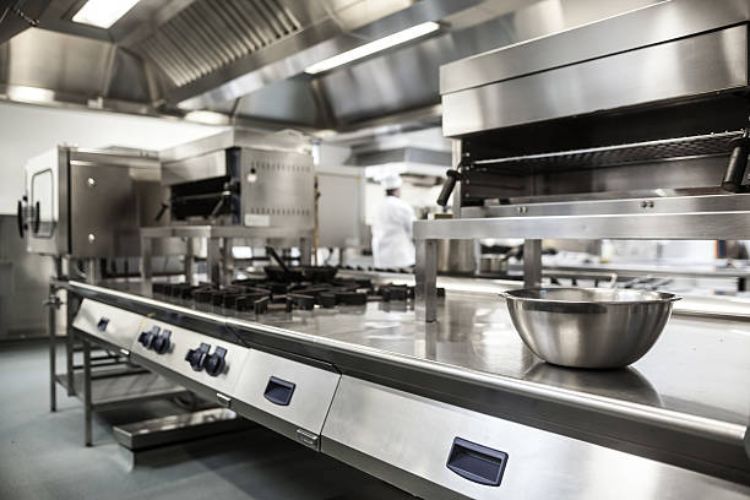
In the bustling environment of a commercial kitchen, high-quality equipment is more than just a luxury. It is an essential component that ensures smooth and efficient operations.
Business owners are well aware that inefficient processes can significantly increase overheads and labour costs. This is where quality commercial kitchen equipment comes into play, acting as a powerful tool to streamline operations, reduce unnecessary expenses, and enhance productivity.
Investing in high-performance ovens or precision cookers, for example, not only enables your team to prepare meals swiftly but also helps maintain consistency across dishes - something that customers highly appreciate.
Having the right cooking appliances also means that your kitchen can quickly meet any unexpected demands. This is especially important in busy restaurants, where orders come and go at a rapid pace.
Last but not least, commercial kitchen equipment allows you to achieve higher levels of food safety. For instance, blast chillers help preserve the freshness of cooked food while eliminating the risks of cross-contamination.
Key Takeaway:
Top-notch commercial kitchen gear is no mere extravagance, it's a game-changer for workflow efficiency. Pairing this with a strategic layout minimises disruption and maximises productivity.
But don't forget the cherry on top - regular maintenance. It keeps your kit in tip-top shape, avoiding hiccups that could cost time and money.
Unveiling the Impact of Commercial Catering Equipment on Workflow Efficiency

The contribution of commercial catering equipment to workflow efficiency is significant, especially in a bustling hospitality environment. Optimal selection and strategic placement of kitchen supplies can boost productivity, reduce waste, and enhance overall profitability.
Nailing Space Optimization with Effective Layouts
A well-structured commercial kitchen layout makes full use of its space to streamline operations. Key pieces of catering equipment should be conveniently placed for easy access, reducing unnecessary movement during peak service times. For example, situating cooking appliances near prep areas can save precious time.
Safety is another critical consideration that cannot be overlooked. Adequate spacing between various items not only reduces accident risks but also improves staff well-being—a crucial factor contributing to enhanced workflow efficiency.
Quality Commercial Catering Equipment: A Non-Negotiable Factor for Success
Selecting top-notch commercial catering equipment isn't just about durability—it's an investment in efficient workflows too. High-grade products are built with functionality at their core; they often incorporate advanced technologies that increase speed and precision while decreasing energy consumption.
The last thing any business owner wants is a kitchen delay due to technically challenged machines. Quality equipment eliminates that risk, so you can focus on providing top-notch meals without worrying about the reliability of your appliances.
Maintenance Regularity: An Underestimated Game-Changer
Routine maintenance significantly influences your commercial kitchen equipment’s performance over time—directly affecting workflow efficiency as a result. Machines that are well-maintained operate smoother and faster while being less susceptible to unexpected breakdowns, which could disrupt daily operations substantially.
This includes cleaning tasks like descaling coffee machines or degreasing ovens alongside more technical checks such as recalibrating thermostats or inspecting gas connections—all vital steps ensuring consistent performance from your valuable assets.
Key Takeaway:
Boosting workflow efficiency in a commercial kitchen is no piece of cake. It requires careful selection and placement of top-notch catering equipment, ensuring optimal space usage while minimising risks.
Regular maintenance checks are as essential as your morning brew to keep the machines running smoothly, thus avoiding unexpected hiccups that could put a spanner in the works during peak times.
Improving Workflow Efficiency by Streamlining Food Preparation and Storage Areas

A well-designed commercial kitchen is the beating heart of any successful hospitality business. The key to this success? It's all about optimising food preparation areas and storage places.
Just like how every business thrives on providing a wide range of services, your commercial kitchen needs versatility too. And guess what? Your secret weapon could be something as simple as an effective pantry layout or proper inventory management.
Intrigued yet? Let's explore more.
Pantry Layout: More Than Just Shelves
Your pantry isn't just a room filled with shelves; it’s where efficiency begins. An organised pantry can streamline operations in ways you wouldn’t believe until you've experienced it first-hand.
Firstly, it allows for easy identification and quick access to ingredients. Secondly, your team can use the space as storage locations for all kinds of products – be it fresh produce or emergency supplies. Lastly, everything is set up in an orderly manner that minimises disruption during peak hours.
The Power Of Proper Inventory Management
If I told you that inventory management could have similar growth effects on your kitchen workflow, would you believe me? Well, it does.
The power of proper inventory management lies in its ability to keep track of supplies and stock flow levels, as well as its capacity to ensure timely restocking. This not only reduces costs but also eliminates the risk of running out of critical ingredients during peak hours.
And that's not all – efficient inventory management can help you better manage your waste too! By tracking the number of unused food items and their expiry dates, restaurants are able to minimise wastage.
Making Every Square Foot Count In Food Preparation
Another trick to boosting workflow efficiency in commercial kitchens is using every square foot possible.
Small kitchen spaces require clever organisation and smart purchases of multi-functional equipment. By exploiting the space available, you can maximise productivity without compromising on quality. This not only cuts down on clutter but also saves time as chefs are able to move around with ease.
Workflow: The Key to Enhancing Efficiency in a Commercial Kitchen

The efficiency in a commercial kitchen is not a coincidence. It is the result of well-planned and prioritised tasks. And this is where your restaurant or café can stumble if you are not careful.
Missteps, poor planning, and lackadaisical judgement all have a negative impact on productivity. Imagine this: a chef failing to prioritize work tasks, busying themselves with less urgent duties while more pressing ones remain idle.
A Clear Role Leads to a Well-Performed Role
In the heat of service at any bustling restaurant or café, knowing one's role is crucial for smooth operations. That's why understanding the duties of kitchen staff is paramount because when everyone knows their job, responsibility thrives.
When roles are clear-cut and understood by all involved parties, chaos subsides into orderliness. Misunderstandings? Gone.
Confusion? Eliminated.
What remains is an efficient workflow unhindered by communication snags or misinterpretations. Here's how you can further enhance efficiency and workflow in your commercial kitchen.
Prioritising Tasks: The Key to an Efficient Workflow
In the fast-paced world of catering kitchens, being busy does not always mean being productive; smart working trumps hard work every time. Prioritising tasks allows you to focus on what matters most first before moving on to lesser urgencies, ensuring maximum use of resources and time without compromising the quality of output.
Duties & Responsibilities: Striking the Right Balance
Finding the right balance between various duties and responsibilities in a buzzing commercial kitchen might seem like spinning plates, but believe me – it's achievable. An imbalance could cause some areas to be overlooked while others receive excessive attention, leading to an overall reduction in productivity levels.
To avoid such pitfalls, management must constantly review processes, looking for ways to make improvements and striving for optimal distribution among team members based on workload requirements and the nature and urgency of respective tasks at hand.
The Benefits of Upgrading to Modern Kitchen Equipment

Envisage a kitchen that is not only effective but also cost-effective and environmentally conscious. That's what modern kitchen equipment brings to the table.
Take Rational combi ovens, for instance - they're like the Swiss army knife of commercial cooking appliances. With their unique blend of steam and convection methods, these machines offer unrivalled temperature control and consistency in food preparation.
Their self-cooking centre feature takes it up another notch by automating several cooking processes, saving both time and labour costs while ensuring high-quality output every single time.
In addition to boosting efficiency, upgraded kitchen technology can help your business save big on energy bills too. Newer models are designed with energy conservation in mind; they use less electricity or gas than older versions, which means lower operating expenses over time.
Eco-Friendly Advancements in Kitchen Technology
In this day and age, sustainability has become increasingly critical for the preservation of our planet. It’s no surprise, then, that businesses across sectors are going green – including those within the hospitality industry.
Modern catering equipment allows you to adopt environmentally friendly practices without compromising on performance standards. Water-efficient dishwashers and induction cooktops have become popular choices due to their minimal resource usage coupled with top-notch results.
Rational combi ovens stand out once again here thanks to their eco-conscious cleaning features, which require lesser amounts of water and detergents compared to traditional options, thus contributing towards better hygiene levels as well as reduced waste generation within commercial kitchens.
Sustainability isn't limited only to using green products, though: regular maintenance schedules for all types of catering equipment play a crucial role too. Machines that receive timely servicing tend to consume fewer resources, thereby further enhancing overall operational efficiency.
Moving ahead with Rational oven upgrades or other such advancements, therefore, offers multiple benefits - making them a worthwhile investment for any professional culinary setup aiming to deliver excellent services while also caring about our planet.
Key Takeaway:
Upgrading to modern kitchen equipment, like Rational combi ovens, not only revs up your culinary efficiency but also trims down energy bills. By embracing eco-friendly appliances and regular maintenance schedules, you can whip up top-notch dishes while caring for the planet.
It's a win-win situation: better food output with lower operating expenses and reduced waste generation.
Unpacking the Business Sense Behind Premium Commercial Kitchen Equipment

You might think investing in high-quality commercial kitchen gear is solely about aesthetics. However, it goes beyond that. It is a sound business decision that optimises your workflow and boosts profits.
Top-notch appliances can outshine less expensive options. This results in quicker prep times, less waste, and consistent quality - all essential for any hospitality venture aiming to make solid business sense.
The Art of Maximising Your Investment
To truly extract value from this investment, you need to understand how these appliances fit into your overall operations. For instance, an efficient commercial refrigeration system does more than just chill food; it preserves freshness and reduces spoilage rates – directly impacting cost control measures.
Beyond immediate needs like storage capacity or speed of operation when choosing such equipment, future-proofing should also be considered. This involves selecting versatile units that can adapt as menu offerings evolve over time - another reason why investing in higher-end options makes sound business sense.
Maintenance costs are also worth considering when calculating ROI for commercial kitchen equipment purchases. Premium appliances tend to last longer due to their robust construction using durable materials that resist wear and tear better than lower-grade alternatives – further demonstrating why making an initial larger investment can pay off in the long term through reduced repair bills and minimized downtime disruptions.
Paving The Way To Success With High-Quality Appliances
This discussion highlights how smartly investing in quality commercial kitchen tools is not just an expense but a calculated strategy aimed at optimizing operational efficiencies while delivering consistent customer satisfaction levels – thereby helping businesses thrive amidst competitive industry pressures by displaying true sound business acumen.
An efficient refrigerator not only keeps ingredients cold but also helps preserve their freshness, significantly reducing wastage rates.
Selecting versatile units capable of adapting as menus change over time ensures future-proofed investments.
Durable premium-grade appliances reduce maintenance costs through extended lifespans compared to low-cost counterparts.
Your culinary space becomes more than just visually appealing with top-notch equipment; it transforms into a powerhouse contributing substantially to maximized returns on investments while exemplifying genuine sound business sense.
Ensuring Food Safety and Hygiene in Commercial Kitchens
Maintaining top-notch food safety standards is crucial for any commercial kitchen. Adhering to stringent hygiene protocols is vital for averting cross-contamination in a commercial kitchen, not just keeping ingredients fresh.
Imagine having stainless steel benches that are easy to clean, and maintain, and provide an excellent platform for meal preparation without risking contamination. Stainless Steel Benches, known for their resistance against corrosion and bacteria harbourage, can be a game-changer in your workspace.
The Art of Keeping Raw Foods Separate
Avoiding cross-contamination between raw foods isn't merely essential; it's fundamental good health practice within a commercial kitchen setting. The trick lies in creating designated areas on your prep surface for different types of food - veggies here, meats there.
This simple act doesn’t only keep raw foods separate but ramps up workflow efficiency too by reducing time spent searching amidst chaos.
Safeguard Health with Delivery Slips Processing & Cooked Foods Separation
Prompt processing of delivery slips ensures that fresh produce doesn't sit around – potentially leading to spoilage or bacterial growth if left unchecked. Regular checks on deliveries aid stock management while promoting higher turnover rates, thus contributing towards improved overall efficiency.
In addition, storing cooked foods separately from other goods prevents potential transmission of bacteria from raw ingredients onto ready-to-eat dishes - mitigating risks such as outbreaks among consumers, hence safeguarding business reputation over time.
Cleanliness Through Efficient Workflows: A Win-Win Situation
Having a tidy kitchen can really ramp up productivity and keep things clean. You see, when everything's in its place, spills are less likely to happen. This cuts down on accidents like slips while orders are being filled – making the process quicker without sacrificing safety measures already in play.
Daily chores involve cleaning after each task before starting the next one to avoid creating unnecessary messes that could turn into hazards because of slippery floors from spillages and such. By doing this, we're keeping potential incidents at bay which helps maintain peace among staff members by providing a smoother working environment.
Key Takeaway:
Stainless steel benches, swift delivery slip processing, and a well-organised workspace - are the secret ingredients to an efficient commercial kitchen. Not only do they keep food fresh and safe from cross-contamination, but also streamline workflow by cutting down on chaos.
Frequently Asked Questions:
What are the advantages of having a kitchen workflow system in a commercial kitchen?
A well-designed kitchen workflow system enhances productivity, reduces food waste, and improves staff efficiency. It also ensures optimal use of space and resources.
What is the purpose of an efficient workflow within a commercial kitchen?
An efficient workflow minimises unnecessary movement, boosts productivity, increases safety standards, and ultimately leads to improved customer satisfaction by ensuring timely service.
What are the benefits of commercial kitchen equipment?
Commercial kitchen equipment provides reliability, durability, and high performance. They streamline operations while maintaining quality standards - vital for business growth in the hospitality sector.
How can I improve my kitchen workflow?
You can enhance your kitchen's workflow by strategic placement of appliances, implementing effective inventory management systems, and regularly servicing your catering equipment to ensure peak performance.
Conclusion
Learning how commercial kitchen equipment enhances workflow efficiency is essential for businesses in the hospitality sector. Investing in commercial kitchen equipment is more than just a business expense; it is the key to unlocking workflow efficiency.
From strategically placing appliances to optimizing food preparation and storage areas, every detail matters. The importance of maintaining high standards for food safety and hygiene cannot be overstated; they are crucial components of an efficient commercial kitchen setup.
Catering equipment designed specifically for commercial use plays a vital role in streamlining operations. Modern, technology-driven appliances not only save time but also contribute to sustainability with their eco-friendly advancements.
Regular maintenance ensures longevity, while proper usage maximizes the performance of these cooking devices. In conclusion, investing wisely in quality restaurant-grade appliances makes sound business sense as it directly impacts workflow efficiency and overall success.
If you are ready to take your hospitality business to new heights by improving productivity and ensuring top-notch food safety measures through advanced commercial kitchen equipment, consider exploring Industry Kitchens' wide range of high-end appliances. It is time to experience how superior catering tools can redefine your culinary venture!


