


How to clean stainless steel pans? Start with the proper steps and the right tools. Stainless steel cookware is a favourite in hospitality kitchens across Australia because it's tough, reliable, and delivers consistent results.
But to keep it performing at its best, you need to care for it properly. If not cared for properly, the stains, stuck-on food, and burnt areas can shorten the life of your pan.
At Industry Kitchens, we've seen how simple cleaning routines can significantly improve service speed and cookware longevity. In this guide, you'll learn straightforward methods to clean stainless steel, restore shine, and prevent future damage so your pans stay ready for every service.
TL;DR: Keep Your Stainless Steel Pans Spotless
Clean effectively: use the right tools, wash after each use, handle stuck-on or burnt food, and deep clean tough stains when needed.
Protect your pans: avoid using strong chemicals, steel wool, and stacking wet pans.
Prevent sticking and damage: preheat pans, use enough oil, rinse immediately after cooking, and store carefully.
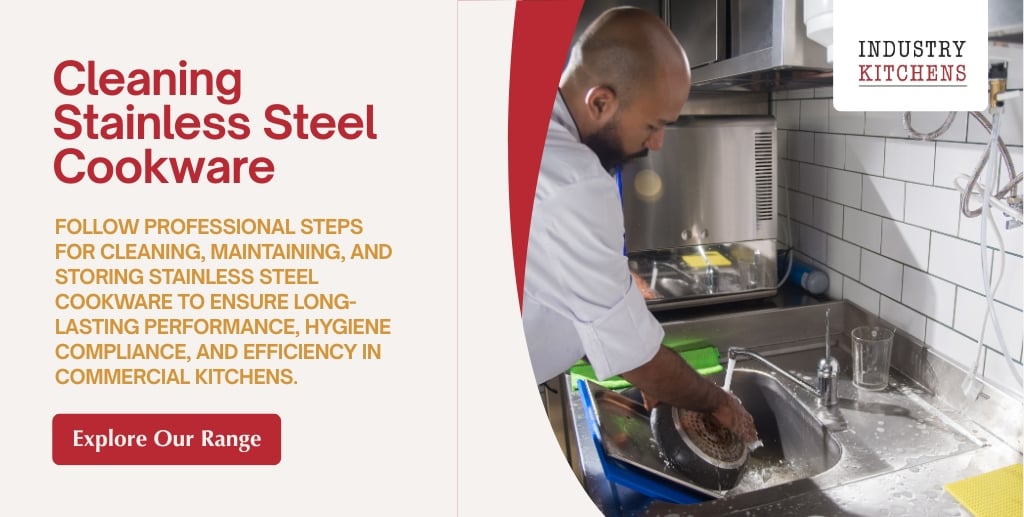
1. Use the Right Tools in Cleaning Stainless Steel Cookware
Cleaning stainless steel cookware is easier when you use the right tools. These tools can protect stainless steel surfaces from scratches, stains, and water spots. Having these on hand also makes everyday cleaning faster and less stressful. So what are the tools you basically need?
Warm or hot soapy water
Food-safe dishwashing liquid
Non-abrasive sponge or microfibre cloth
StellarChem Stainless Steel Cleaner for heavy-duty cleaning
Soft detail brush for handles and rivets
Clean drying towels
2. Clean Your Stainless Steel Pan After Each Use
Daily cooking in your stainless steel pan leaves behind light food residue, oil, or water spots. A simple wash is usually enough to keep stainless steel cookware looking good. By following a short routine, you can quickly clean your stainless steel pans and prevent long-term damage.
Here's how you should do it:
Let the pan cool first. This prevents thermal shock, which can harm stainless steel cookware.
Fill the pan with hot, soapy water. Add a little dishwashing liquid to remove lighter stains.
Use a soft sponge to wipe away food. Scrub it gently so you can protect its surface.
Rinse the pan with warm water until it's clear of soap.
Dry the pans immediately with a paper towel or soft cloth to prevent water spots.
This simple routine works well for both stainless steel pots and pans. But you'll need a more effective method when left with burnt food or stuck-on bits.
3. Remove Stuck-On Food or Burnt Food to Avoid Tough Stains
Sometimes, food sticks to the pan and won't come off with soap and water. Burnt food, in particular, can leave behind tough stains. You can loosen stuck-on food without damaging your stainless steel cookware with these proper steps.
Fill the pan with hot water and mild detergent; let it soak.
Scrape gently using a wooden or silicone spatula.
For persistent buildup, use StellarChem Stainless Steel Degreaser.
Rinse and dry completely.
These steps should clear burnt areas without damage. Once the pan is clean, you might still notice discolouration or water marks. Let's sort those out next.
4. Fix Discolouration and Water Spots to Restore Shine
High heat, acidic food, and hard water often leave marks on stainless steel cookware. These are the rainbow-coloured stains, or dull spots on the surface. Thankfully, both are easy to fix with simple kitchen ingredients.
For rainbow stains, wipe with StellarChem Stainless Steel Polish.
Use StellarChem stainless steel cleaners to buff out tough stains.
Rinse with warm water, then dry immediately with a soft cloth or paper towel.
These quick fixes help restore shine. If stains are deeper, it's time for a proper deep clean.
5. Deep Clean Your Stainless Steel Cookware When Needed
Washing regularly does not necessarily eliminate all stains and food residues. In some cases, your cookware requires a thorough cleaning to get it shiny again and make it look good.
When to Deep Clean:
When rainbow-like heat stains won't come off.
If there's a greasy film even after washing.
Dark spots on the food that cannot be removed by daily cleaning appear when the food is burnt.
If water spots keep coming back.
General Method for Deep Cleaning:
Apply a stainless steel cleaner, let it dwell briefly, then scrub gently with a non-abrasive sponge. Rinse thoroughly and dry. Regular deep cleaning ensures longevity and consistent cooking results.
6. What NOT to Do When Cleaning Stainless Steel Pans
Not all cleaning methods are safe for stainless steel cookware. Some products and habits can scratch, stain, or even warp pans, so it is important to know what to avoid to protect stainless steel pans for everyday use.
Here's what to avoid:
Avoid letting acidic food (like tomato or vinegar sauces) sit overnight—prolonged contact can cause pitting and discolouration.
Scrubbing against the grain of the steel—always clean in the same direction as the brushed finish to avoid micro-scratches.
Air-drying pans in stacks—Trapped moisture causes stubborn water marks and can transfer stains between pans.
Over-polishing with harsh cleaners—Too much chemical polishing can thin protective layers and make pans prone to staining.
Don't use bleach or strong chemicals—these damage stainless steel cookware.
Avoiding these mistakes will keep your pans in better shape. And if you want to make cleaning even easier, the best thing to do is to stop food from sticking in the first place.
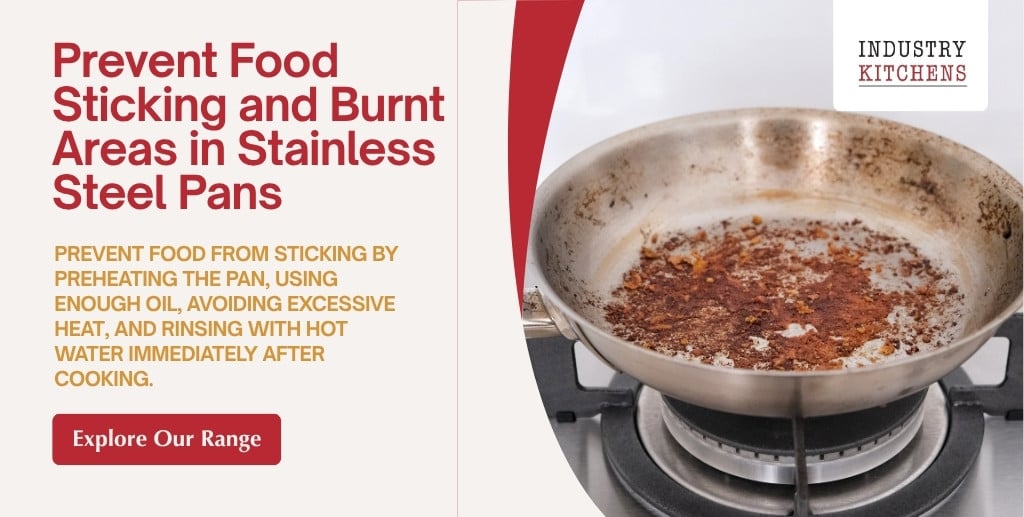
7. Prevent Food Sticking and Burnt Areas
Preventing food from sticking is the best way to make cleaning easier. A few cooking habits can reduce burnt food and stubborn residue. These tips keep stainless steel cookware cleaner and more reliable in the kitchen.
Preheat the pan before adding oil. This helps prevent stuck food.
Don't cook on very high heat unless you're searing meat.
Use enough oil or butter to coat the pan when cooking.
Rinse pans with hot water straight after cooking to lift away food before it sticks.
These small habits keep stainless steel pans cleaner for longer. And once the cooking's done, good storage will protect them until you need them next.
8. Store Your Stainless Steel Pans Carefully
Store your stainless steel pans properly to help them last longer and keep the surface safe from scratches. With proper care, your pans will always be ready to use.
Before storing, dry your pans thoroughly with a soft cloth or paper towel.
Place pans on a heat-resistant surface or hang them when possible.
Place a paper towel between pans if you'll stack them to avoid scratches.
Some stainless steel pans are dishwasher safe, but hand washing is safer for long-term care.
Your cookware stays ready for everyday use with the proper storage and care.
Conclusion
Still asking, ‘How to clean stainless steel pans?'. Cleaning stainless steel pans correctly makes them last longer and perform better in service. Simple steps like using hot, soapy water, Stellarchem cleaning agents for tougher stains, and drying immediately keep cookware spotless and ready.
These habits save time and prevent downtime in hospitality kitchens. At Industry Kitchens, we know clean stainless steel means smoother service and better results. Follow these practices, and your pans will stay reliable for years.
Frequently Asked Questions
Can you put stainless steel pans inside the dishwasher?
Yes, many stainless steel pans are dishwasher safe, but hand washing them is always safer. The dishwasher can cause water spots or fade the shine over time. If you use it, dry the pan with a soft cloth straight after the cycle to prevent marks and keep it looking new.
What is the fastest way to clean stainless steel cookware during service?
Fill the hot pan with boiling water and a drop of washing-up liquid. Let it sit for a few minutes to loosen food, then scrub quickly with a soft sponge. This "boil, soak, scrub" method saves time and keeps pans ready for the next dish without harsh cleaning.
How do you clean stainless steel pots compared to pans?
Cleaning stainless steel pots and pans follows the same method, though pots may require longer soaking due to their depth. For stuck-on food, fill the pot with hot water and a food-safe commercial detergent, then soak until residue loosens before scrubbing gently with a non-abrasive sponge. There should be no water spots, and the finish should always be polished by rinsing and drying.
Is baking soda safe for stainless steel?
Baking soda is not harmful, but it is not advisable to use it frequently in commercial kitchens. To ensure food safety and consistency, a commercial stainless steel cleaner that is suited to hospitality use should be used. These products are effective in eliminating stains and residue without scarring the surface and do not interfere with hygiene compliance.
How do I keep stainless steel surfaces shiny long-term?
Wash your pans with warm water immediately after washing and dry them immediately with a tea towel. Strong chemicals such as bleach or steel wool should be avoided, as they may destroy the surface. Just wipe it off with a little amount of stainless steel polish and rub it down with a soft cloth. It can be done easily and keeps your stainless steel looking like new for years.
Read more of our related articles here:


