


Finding the right oven cleaning chemicals can be hard. However, we're going to simplify this puzzle step by step. This article will arm you with knowledge of the best market options, eco-friendly solutions, and how to pick them based on their ingredients. We'll also touch upon safety features worth considering for peace of mind during use.

You're set to discover not just any cleaners but those that promise effectiveness against stubborn grime and are kinder to our planet too. Additionally, we're armed with savvy advice to maximise the use of these eco-friendly cleaning solutions. Whether it’s your regular oven or a combi one needing attention, you’ll leave equipped to make an informed choice.
Table Of Contents:
Ultimate Guide to Oven Cleaning Chemicals: Safe & Effective
The Best Oven Cleaning Chemicals on the Market
Eco-Friendly and Safe Oven Cleaning Solutions
Ingredients to Look For in Oven Cleaners
Safety Features of Top Oven Cleaners
Tips for Using Oven Cleaning Chemicals Effectively
Specialised Cleaners for Combi Ovens
Frequently Asked Questions:
Conclusion
The Best Oven Cleaning Chemicals on the Market
Scouring the market for ideal oven cleansers can be a slippery ordeal, yet our selected favorites guarantee your triumph. Decoding why these cleaning agents shine among the myriad of options for sprucing up your kitchen can be quite enlightening.
StellarChem WCIOG5 - Best Oven & Grill Cleaner 5L
If you take pride in keeping your kitchen clean and sparkling, you know how important it is to have a reliable and potent cleaner on hand to tackle stubborn grease and grime. That's why we're excited to introduce you to StellarChem WCIOG5—the ultimate solution to your kitchen cleaning needs.
Whether you're a professional chef running a busy restaurant or a home cook looking to keep your kitchen in tip-top shape, StellarChem WCIOG5 is guaranteed to deliver the results you need. Its potent formula swiftly penetrates and dissolves tough stains, leaving your oven, grill, and other kitchen appliances sparkling clean.
So why settle for a subpar cleaner when you can upgrade your cleaning routine today with StellarChem WCIOG5? Say goodbye to stubborn grease and grime and hello to a sparkling clean ovens!
Convotherm CC25L - ConvoClean Oven Cleaner
Are you having a hard time removing stubborn stains and grease from your oven? If so, we recommend trying out Convotherm CC25L Convoclean Oven Cleaner. This powerful cleaner is perfect for both professional kitchens and home cooks, and it's designed to tackle even the most stubborn grime and dirt in your oven.
Using Convotherm CC25L Convoclean Oven Cleaner is easy and affordable, and it will leave your oven looking clean and hygienic. Don't let a dirty oven ruin your cooking experience - try Convotherm CC25L Convoclean Oven Cleaner today!
Read more from our article on how to Maximise Cleanliness with Rational Oven Cleaner Guide

Eco-Friendly and Safe Oven Cleaning Solutions
All Purpose Sanitiser Concentrate
When it comes to choosing eco-friendly oven cleaning chemicals, the All Purpose Sanitiser Concentrate stands out for its commitment to safety and environmental responsibility. This cleaning agent guarantees a spotless kitchen by steering clear of abrasive substances. Crafted to strike a balance between potency and safeguarding both our well-being and Earth's, the concoction at its core is conscientiously formulated.
Embracing these eco-conscious oven cleansers offers the dual advantage of achieving a deep cleanse and preserving surface integrity, all without harshness. In stark contrast to conventional cleaning agents, this versatile disinfectant blend ensures no harmful remnants or vapors linger, offering peace of mind for households with little ones or furry friends.
Moreover, by opting for safe commercial oven cleaners like this one, you're contributing towards reducing harmful chemical usage that can adversely affect ecosystems. It's a step forward in embracing sustainable living practices without compromising on cleanliness standards.
Incorporating eco-friendly oven cleaning chemicals into your routine isn't just about keeping your appliances spotless; it's also an investment in our planet's future. With options like these available at competitive prices—priced affordably compared to their chemical-laden counterparts—it has never been easier to make responsible choices that align with both your household needs and ecological values.
Venturing into the realm of eco-friendly cleaning solutions, consider diving into online forums and websites where people openly discuss their real-life experiences with these greener options. By sharing insights and experiences, we're cultivating a movement toward cleaner habits that not only elevate our personal spaces but also contribute significantly to the broader goal of global sustainability.
Need help on keeping those cooking equipment sparkling clean? This guide is for you, "Easy Guide: How to Maintain and Clean Catering Supplies"
What are the Oven Cleaner Ingredients to Look For?
When it comes to getting your oven sparkling, not all cleaners are created equal. Knowing which ingredients pack the best punch can save you time and elbow grease.
Common Ingredients Found in Effective Cleaners
Embark on an exploration of oven cleaning agents, and you'll discover a warzone dominated by compounds where grease is swiftly vanquished. The heroes? Sodium hydroxide for heavy-duty grime, sodium carbonate that shows no mercy on burnt food residues, and citric acid - nature's answer to stubborn stains without leaving harmful fumes behind.
If "safe ingredients for oven cleaners" sounds like an oxymoron, think again. While we've been conditioned to believe that only the harshest chemicals will do the job right; advancements have shown us otherwise. A peek at safe options reveals baking soda as a gentle yet effective contender and vinegar with its acetic acid properties making light work of greasy surfaces. These ingredients prove that muscle isn't always measured by toxicity levels but rather by efficacy against dirt.
To choose wisely means understanding what each component brings to your kitchen battle station.
Key Takeaway:
Know your oven cleaner ingredients to save time and effort. Look for sodium hydroxide, sodium carbonate, and citric acid for tough messes, while baking soda and vinegar solution are great for a safer clean. Knowledge lets you pick the best eco-friendly option without compromising on sparkle.
Safety Features of Top Oven Cleaners
Navigating the realm of oven-cleaning products, it's paramount to balance their potency with their safety credentials. The last thing you want is for your kitchen to turn into a scene from a science fiction movie, with hazardous fumes and toxic chemical residues. Thankfully, manufacturers are stepping up their game by offering products that not only boast impressive cleaning power but also prioritize user and environmental safety.
Low Toxicity Level Cleaners
In the quest for safer options, low toxicity level cleaners have emerged as heroes. Containing less hazardous substances, these items lessen the likelihood of skin problems or breathing difficulties commonly linked with conventional cleaning agents. But don't let their gentler nature fool you; they're still tough on grease and burnt food residue.
Fume-Free Formulas
Launching fume-free solutions into the oven cleaner market has utterly transformed it, offering a safer yet highly effective alternative to traditional options. By eliminating harsh odours and dangerous vapours typically associated with oven cleaners, these innovative solutions offer peace of mind along with sparkling results.

Tips for Using Oven Cleaning Chemicals Effectively
Getting your oven spick and span doesn't have to be a back-breaking task, especially if you've got the right chemicals at hand. But before you don those rubber gloves and start spraying away, there are a few things worth knowing to make sure you use these potent potions safely and efficiently.
The Proper Way To Apply Cleaners
To get the most out of your chosen product—be it foam degreaser or gel formula—it's crucial to follow the application instructions on the product label carefully. Most require applying evenly across surfaces and leaving them for some time to work their magic effectively.
Bear in mind that some areas within ovens need more attention than others; corners and hidden nooks can harbour stubborn grime that needs extra elbow grease.
Safety First
While tackling this chore head-on can feel satisfyingly productive, never underestimate safety measures when using strong cleaning agents such as grill cleaner or combi-oven cleaner solutions—their efficacy comes from powerful ingredients after all. Always wear protective gear like nitrile rubber gloves and ensure good ventilation during use.
Specialised Cleaners for Combi Ovens
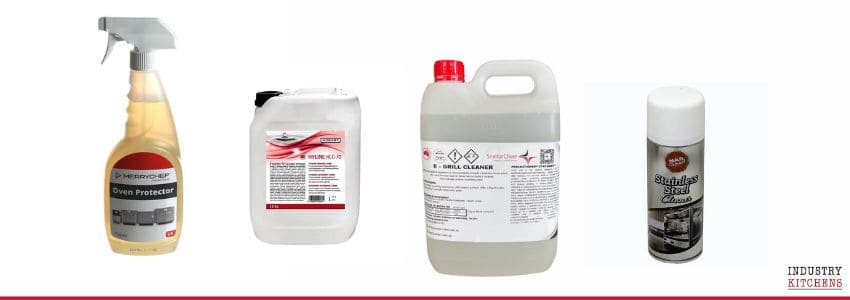
Combi ovens, which can steam, bake, and roast all within a single compact machine, have transformed the landscape of commercial cooking. But this versatility also means they can be a nightmare to clean without the right products. That's where specialised combi oven cleaning chemicals come into play.
Key Takeaway:
For combi ovens, picking the right cleaner means easier cleaning and longer life for your equipment.
Need more tips on keeping your kitchen equipment clean? Here is our guide on "How to Maintain and Clean Your Commercial Pizza Oven for Optimal Performance"
Step By Step on How to Use Your Oven Cleaning Chemicals
Cleaning an oven is not anyone's idea of fun but when it is done the right way then it can make a difference in a commercial kitchen. So even if you're cleaning your commercial kitchen, using these chemicals properly will make the job easier, faster, and safer.
Let me walk you through it together:
1. Switch Your Oven Off and Let It Cool (Just a Bit)
Start by turning your oven off completely. We don't want to clean a hot oven because it's dangerous. But if your oven is a bit warm but not totally hot then the heat can help loosen up any grease and grime. This makes the cleaning product work harder so you don't have to.
2. Take Out the Racks and Accessories
Remove all the trays, shelves, and any other detachable parts. These accessories can carry most baked on food so it would be easier if you will soak and scrub them separately. You can put them in a sink or a tub with cleaner and warm soapy mix if you're going eco-friendly.
3. Gear Up for Safety
Before you get started, slip on a pair of gloves—rubber or nitrile is best. If you’re using a strong chemical cleaner, goggles, or even a face mask can be helpful too. And don’t forget ventilation. You must open your window or turn on your kitchen’s exhaust fan as this can help you keep the air fresh inside and prevents any toxic ingredients from building up.
4. Apply the Cleaner (Evenly and Generously)
Now’s the time to spray or spread your cleaner throughout the oven. Get into the corners, the sides, the back wall, and the base. Just avoid spraying directly onto fans, heating elements, or vents unless the label indicates that it is safe.
5. Scrub It Gently
After letting your product sit for sometime, use a sponge, soft brush or a non-scratch pad to wipe away the grease and grime. Just take note that some dirts doesn't come off easily most especially if its in the corners or near the oven door, so take your time here.
6. Wipe It Down Thoroughly
Once the dirt is loose, use a clean damp cloth to wipe everything down. You need to wash the cloth a few times to get all the remaining dirt off. This is an important step not just for cleaning your ovens but also for your safety. Because we don’t want any chemical traces left behind when you use your oven again.
7. Dry and Replace the Parts
Use a dry towel or cloth to remove any moisture behind. Or just let everything dry on their own if you’re not in a rush. Once it is dry, put the oven racks and trays back into the oven. Now your oven is ready for its next use.
8. Dispose of Waste Responsibly
If you’ve collected a bowl or cloth full of grease and cleaner, don’t pour it straight down the sink. Some chemicals and oils aren’t meant to go into your plumbing. Check with your local guidelines or use a grease trap or bin for disposal.
9. Do a Quick Heat Cycle
If you used strong cleaning chemicals or want to be sure that there is no scent left inside your oven then you must turn on your oven on a low setting around 100 °C for 10–15 minutes. This helps burn off any residue and gets it ready for cooking again.
Frequently Asked Questions:
What chemicals do oven cleaners use?
Most commercial oven cleaners uses sodium hydroxide or potassium hydroxide because these two are strong chemical degreasers. They can remove any on baked-on grease and carbon build-up. Just remember to always follow safety instructions when using them around your staff or food prep areas to avoid any problems.
What is the best homemade oven cleaner?
You should try mixing baking soda and a bit of water to form a thick paste. Spread it inside your oven and let it sit overnight. Many uses this type of mixture simply because of its ease of use, cheap, and doesn't involve any harsh ingredients. This gentle DIY oven cleaner is even perfect if your businesses are looking for low waste cleaning techniques.
What is the best chemical use to clean an oven?
The best chemical to clean an oven is the one that is strong on grease but safe for your kitchen. Many business owners use products that have sodium hydroxide because it can remove any build-up much faster. Just make sure it's safe for food, doesn't break down, and is used precisely to the directions for a thorough, efficient cleaning.
What is the best substance to clean an oven?
Baking soda is a go-to for many commercial kitchens. When you mix it with a bit of water, it creates a paste that breaks down grease and grime without the use of harsh chemicals. It is cheap, easy to use and safe to use inside your kitchen.
What do professionals use to clean an oven?
Most professional use strong oven cleaners which are specifically made for commercial kitchens. These products helps break down grease and burnt-on residue fast. Some prefer foaming sprays for vertical surfaces, while others use gel formulas for tough spots. It’s all about saving time and getting great results.
What is the main ingredient in an oven cleaner?
In commercial oven cleaners the main ingredient you will commonly find is the sodium hydroxide which is also known as caustic soda. This ingredient works by softening burnt food, grease, and stubborn residues, making them easier to wipe away any grime and grease.
Do baking soda and vinegar really clean ovens?
Yes they can! While this is not as strong as commercial cleaners, baking soda and vinegar can remove its grease over time. It's perfect to use for light to moderate cleaning or regular servicing. Just be patient because cleaning with this is not instant. However, it is safe, natural, and won’t ruin your kitchen with its odour.
Conclusion
So, we've journeyed through the world of oven-cleaning chemicals. You now know the best picks on the market and those that are eco-friendly and safe.
You've gotten the lowdown on which substances make these cleaning agents tick. Safety features? Checked them off too.
Tips for effective use were shared. And if you have a combi oven, there's something special just for you.
Remember: Not all cleaners are created equal. Choose wisely based on your needs. Go green when possible; it benefits our planet and your home.
Last but not least, safety first! Pick products with low toxicity levels to keep those nasty fumes at bay.
Read more of our related articles:


